GET 15% OFF ON YOUR FIRST ORDER WITH CODE "KF"
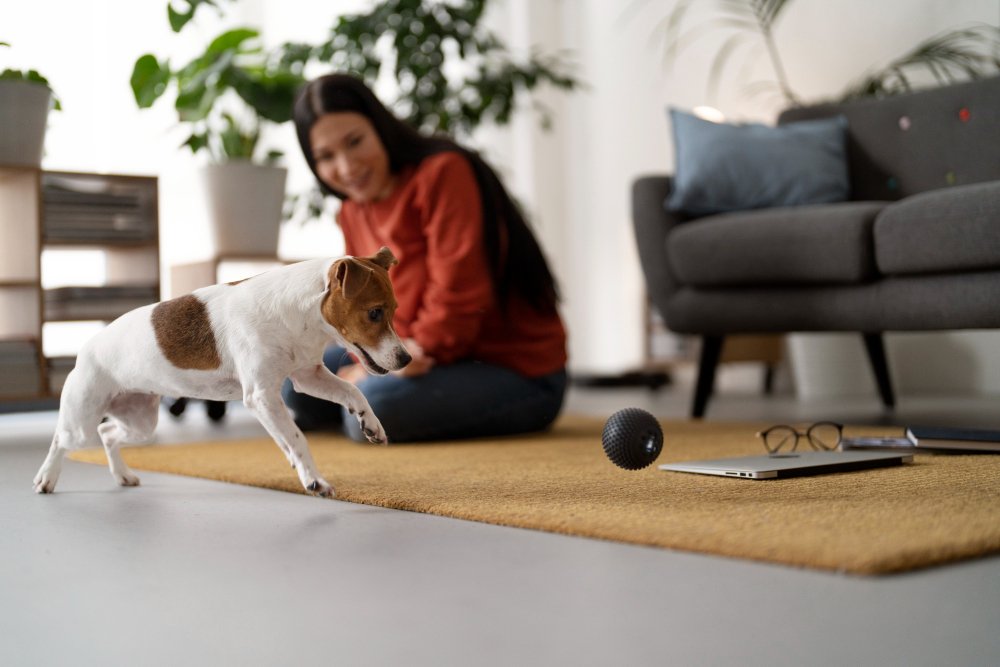
Discover the best ways to keep your dog active and happy, with safe exercises you can do both inside and outside the house, adapted to their age and energy level.
Keeping your dog active inside and outside
Keeping your dog healthy and active takes more than good nutrition: they also need physical exercise and regular mental stimulation. Make the most of playtime with fun, safe routines you can do at home or outdoors.
How much exercise does a dog need?
The ideal amount of exercise depends on age, breed, energy level, and health. In general, healthy adult dogs should get at least 30 minutes of physical activity daily. This supports healthy weight, strengthens muscles and joints, and stimulates the mind.
– Young or very active dogs (like border collies or labradors) may need an hour or more per day.
– Senior dogs or dogs with limited mobility can benefit from short walks and gentle exploration or stretching.
The goal isn’t only to tire them out physically — it’s also to keep them motivated, happy, and mentally balanced.
Benefits of regular exercise
Consistent exercise brings both physical and emotional benefits:
– Keeps your dog fit: helps prevent overweight and obesity-related disease.
– Reduces behavior problems: boredom or lack of stimulation can lead to anxiety, chewing, or excessive barking.
– Strengthens joints and bones: regular movement helps maintain flexibility and prevents stiffness.
– Strengthens the bond with their human: shared activity improves communication and trust.
4 ways to exercise your dog outdoors
-
Agility circuits or obstacle games: stimulate body and mind, improve coordination and endurance. Many parks and classes offer this.
-
Fetch: throwing a ball or frisbee is excellent cardio and focus training.
-
Walks or hiking: provides sensory enrichment with new smells, sights, and sounds.
-
Swimming: ideal in warm weather to build muscle without joint impact.
 Kitchen Fresh Tip: Choose cooler hours (morning or late afternoon) and avoid hot surfaces that can burn paw pads.
4 indoor exercises
-
Learn new tricks: teaching commands or simple skills strengthens your bond and stimulates the brain.
-
Tug-of-war: releases energy and strengthens the body even in small spaces.
-
Interactive puzzle toys: stimulate the mind and reduce stress or separation anxiety.
-
Hide-and-seek: hide toys or treats and let them find them — great for scent work and curiosity.
Conclusion
Exercise — indoors or outdoors — is essential for your dog’s physical and mental wellbeing. It’s not just movement: it’s connection, fun, and holistic care. Adapt the routine to age, breed, and physical condition, and always ensure fresh water and rest after activity.
A balanced, active life translates into a healthier dog, a happier dog, and a better quality of life — exactly what we all want for our best friends.
Sources consulted
American Kennel Club (AKC); VCA Animal Hospitals; American Veterinary Medical Association (AVMA); WSAVA Global Nutrition Committee (2021); Tufts University – Cummings School of Veterinary Medicine; American Animal Hospital Association (AAHA); U.S. FDA Center for Veterinary Medicine; ASPCA Pet Care Guidelines.